ภาพรวม
Casdoor ถูกสร้างขึ้นบน OAuth และใช้โทเค็นเป็นโทเค็น OAuth ของผู้ใช้
Access Token and ID Token
In Casdoor, the access_token and id_token are identical. Both tokens contain the same JWT payload with user information and claims. This is a design choice in Casdoor that simplifies token management.
This approach means:
- Both tokens contain the same user information and custom claims
- Both tokens can be used interchangeably for authentication and authorization
- The token format and expiration settings apply to both tokens equally
- You cannot configure separate claims for
access_tokenandid_token
Token Fields
ต่อไปนี้คือฟิลด์โทเค็นที่มีให้ใน Casdoor:
OwnerNameCreatedTimeApplicationOrganizationUserCodeAccessTokenExpireIn(โทเค็นจะหมดอายุในหน่วยชั่วโมง)Scope(ขอบเขตของการอนุญาต)TokenType(เช่น, ประเภทBearer)
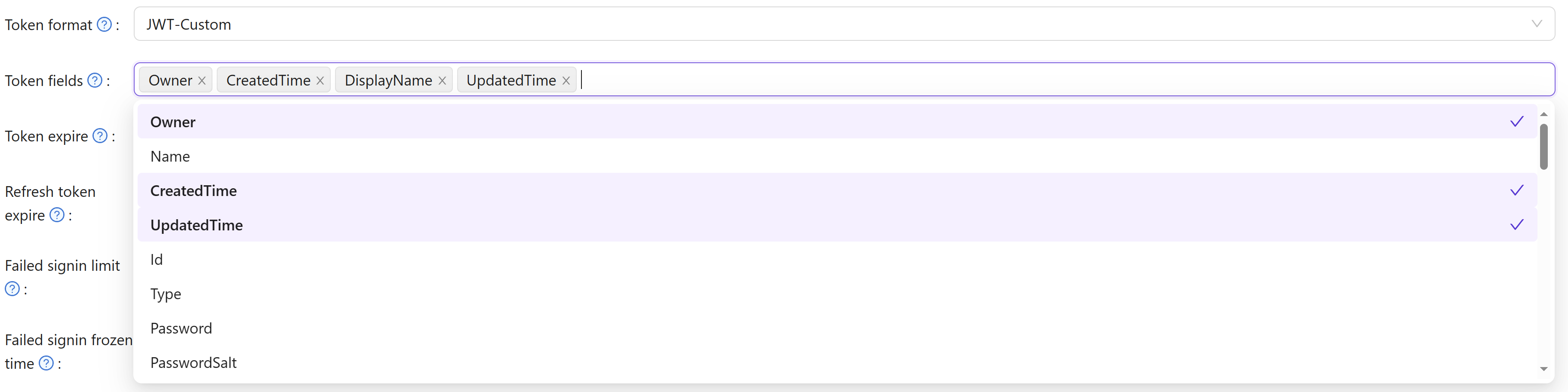
หลังจากเข้าสู่ระบบแอปพลิเคชันแล้ว มีสามตัวเลือกในการสร้าง JWT Token:
JWTJWT-EmptyJWT-CustomJWT-Standard
ตัวเลือกมีดังนี้: JWT จะสร้างโทเค็นที่มีฟิลด์ผู้ใช้ทั้งหมด, JWT-Empty จะสร้างโทเค็นที่มีค่าที่ไม่ว่างเปล่าสำหรับผู้ใช้, และ JWT-Custom จะสร้างโทเค็นที่มีฟิลด์โทเค็นผู้ใช้แบบกำหนดเอง (คุณสามารถเลือกคุณสมบัติในฟิลด์โทเค็น) JWT-Standard will generate a token with some standard OIDC token fields include email, phone, gender and Address (Address value in other format is not standard).
Custom Token Attributes
When using JWT-Custom format, you can define custom attributes with their data types. Each attribute has a Type field that controls how values are included in the JWT:
- Array: The attribute value will always be returned as an array, even if it contains a single element. This ensures compatibility with OIDC clients that expect array types for fields like roles, groups, or permissions.
- String: The attribute value will be returned as a single string (the first element if multiple values exist).
Empty attributes are automatically omitted from the token to keep the payload clean. When configuring attributes for roles, groups, or permissions, using the Array type is recommended for better OIDC compliance and compatibility with systems like Rancher and Keycloak.